
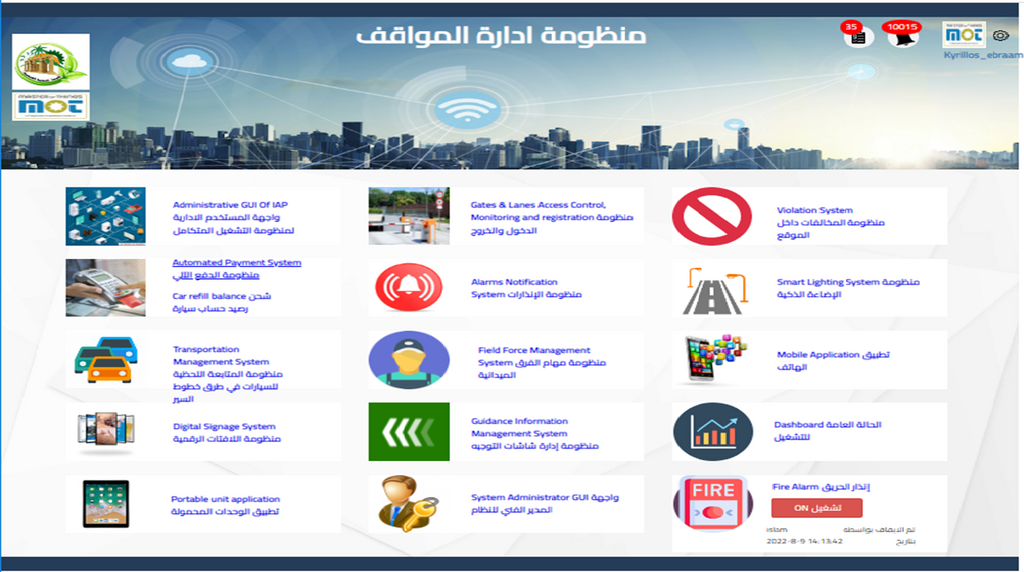
The smart transportation management solution consists of 10 IoT use cases natively integrated to manage and operate the smart public transportation central to enable the station management to centrally manage, operate and control the station smart lighting, station bus entrance & exit access gates, station destinations schedules and station guidance screens for all destinations, station digital signage screens, station automatic toll upon exit, mobile applications for operators, drivers and travelers, etc. The solution is developed on top of MasterOfThings IoT AEP and includes multiple IoT devices (Sensors, readers, actuators and digital signage players, etc.) from various vendors.
Timely follow up all the serving vehicles/cars.
Actuators Automate the station Operations.
Automatically control the station light intensity and its on/off schedule.
Automated/Control the station gates drop arms.
Provide a mobile application for travelers to check the number of cars currently available in the station for each destination line, vehicle queue/schedule, loading time/frequency of cars leaving the station for a specific destination.
Manage the station team tasks and their access rights.
Automatically collect/deduct the station fees from the vehicle electronic wallet.
Provide a mobile application for car drivers and car owners to follow up their schedule, follow up their dedicated vehicle account/wallet, follow up the car location on the map, send feedback, etc.
Manage the station team tasks and their access rights.
Automatically send instant notification to vehicle/car drivers and car owners about the status of their cars, updates in the schedule.
Follow up on the vehicle/car schedule/queue in each destination line.
Promptly update the station guidance screens for each destination line with the actual vehicle queue for relevant destination..
Manage a network of digital signage screens inside the station as source of revenue for the station.
The camera automatically captures images when a sudden stop or harsh braking event is detected.
Camera images can also be captured on demand upon request from authorized remote users.
Captured images are stored on the server for a predefined retention period or storage quota.